Should I Replace My Deck Before Selling My House? An Eastside Deck Builder’s Guide
In this guide, you’ll learn:
When I would replace a deck before selling
When I would repair or resurface instead
Why an unsafe or deteriorated deck can affect a buyer's perception of the entire home
What structural problems we often find where decks connect to houses
How we improve waterproofing and protect new deck framing
How much deck projects can return at resale in the Seattle market
Why a starter home and a custom Eastside home should not necessarily get the same deck
Which TimberTech and AZEK decking products make sense for a resale-focused project
Which railing choices give you a clean, current appearance without unnecessarily increasing the budget
Whether adding a deck cover before selling makes sense
What to ask your real estate agent
What to ask your deck builder before committing to the project
Quick Answer: Should I Replace My Deck Before Selling?
Replace the deck before selling when it is unsafe, structurally deteriorated, visibly rotting or so worn that a reasonable buyer will immediately see it as a major future expense.
Consider resurfacing or targeted repairs when the framing and foundation are sound and the problem is mainly decking, railing, stairs or appearance.
Don't rebuild a structurally sound deck simply because it isn't brand new if smaller improvements can make it safe, clean and presentable.
And before deciding how much to spend, consider the type of home you're selling.
That matters more than people think.
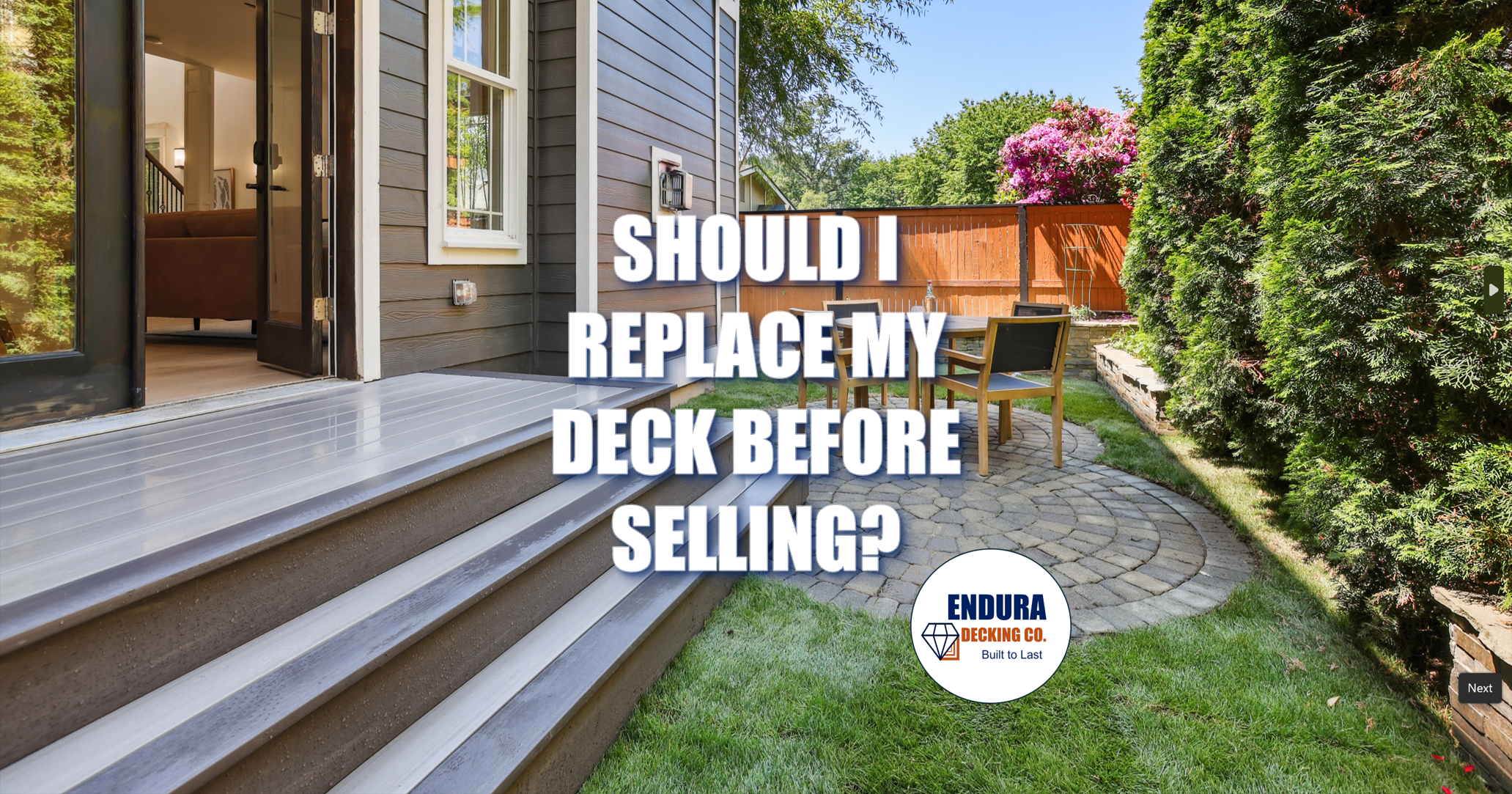
A small deck replacement with Timbertech Vintage Coastline decking boards picture framed with Vintage Dark Hickory.
Should I Replace my deck (or not) before selling my Home?
If you are getting ready to sell your home and your deck is showing its age, you may be asking a pretty expensive question:
Should I replace my deck before selling my house—or leave it for the next owner?
I get this question from homeowners in Sammamish, Issaquah, Bellevue, Redmond and throughout Seattle’s Eastside.
And my answer isn't automatically, “Yes, replace the deck.”
I own a deck company, but I have absolutely told homeowners that I wouldn't recommend rebuilding their deck before selling. If the structure is sound and there are cosmetic improvements that can accomplish what we need, spending tens of thousands of additional dollars may not make sense.
Other times, I look at a deck and think exactly the opposite:
If I were buying this house, this deck would concern me immediately.
That is when replacement can become part of a smart pre-sale strategy.
I’ve been a homebuyer and I’ve sold my share of homes. The right decision comes down to the condition of the deck, the type and value of the home, what buyers in that market expect, and how much money you need to spend to solve the problem.
first, What Kind of Home Are You Selling?
One of the first things I would consider isn't actually the deck.
It's the house.
A deck replacement on a $700,000 starter home should usually be approached differently than the deck on a $2.5 million custom home in Sammamish, Bellevue or Mercer Island.
If You're Selling a Starter or More Budget-Conscious Home
Focus on:
Safety
Clean appearance
Low maintenance
Neutral colors
A simple, attractive layout
Cost-effective railing
Fixing obvious structural problems
Avoiding unnecessary luxury upgrades
You probably don't need the most expensive decking TimberTech makes.
If You're Selling a Mid-Range Eastside Home
You may want to step up the design enough that the outdoor space feels like an intentional part of the home.
That may include:
Picture-frame borders
Cleaner stair design
Black metal railing
Improved flow into the yard
Better integration with doors and entertaining areas
Improved waterproofing and framing protection
If You're Selling a High-End or Custom Home
Now the standard changes.
A deteriorated pressure-treated deck attached to a beautifully remodeled $2 million or $3 million home can feel completely inconsistent with the rest of the property.
A buyer at that price point may expect:
Premium-looking decking
Better architectural detailing
Modern railing
Thoughtful sight lines
Better indoor-outdoor flow
High-quality stairs and fascia
Low-maintenance materials
Better moisture management
That doesn't mean you automatically install the most expensive product available.
It means the deck should look like it belongs on the house you're selling.
A home seller’s Decision Tree: Repair, Resurface or Replace Before Selling?
Here's how I would think through it.
1. The Deck Feels Unsafe or Has Structural Rot → Replace It
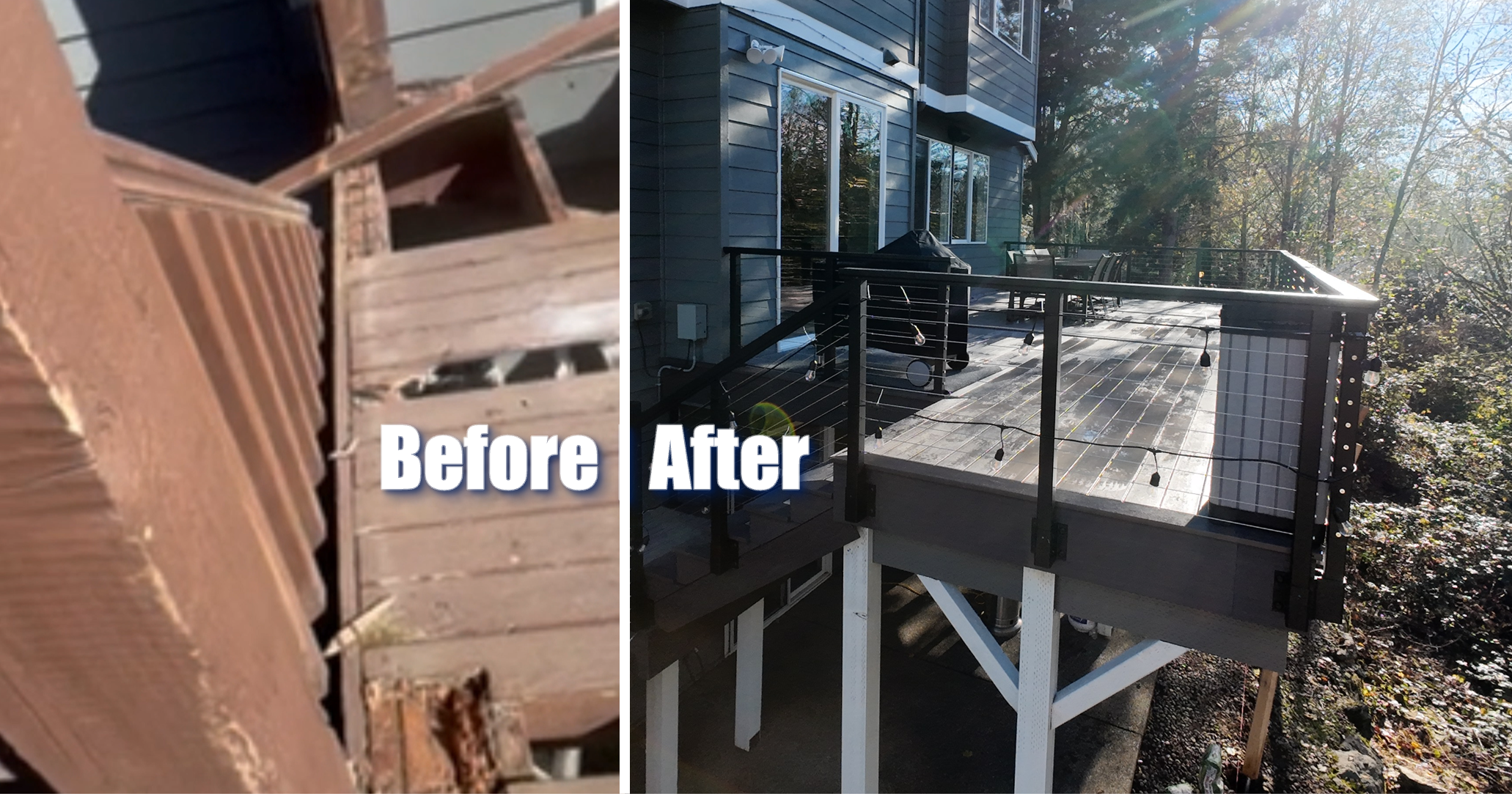
Before and after of second story deck replacement due to rotting post, beams, framing and deck boards.
If I walk onto the deck and find significant rot, movement, failing framing, questionable footings, unsafe railings or major deterioration, this moves very quickly toward replacement.
This is the easiest category for me.
Put yourself in the position of the buyer.
They walk onto the deck with their spouse or kids and it moves under their feet.
Their thought probably isn't: “We’ll deal with that someday.”
It’s more likely: “How soon do I have to fix this before someone gets hurt?”
That is an objection you don’t want attached to your house.
2. The Structure Is Good but the Surface Looks Terrible → Consider Resurfacing
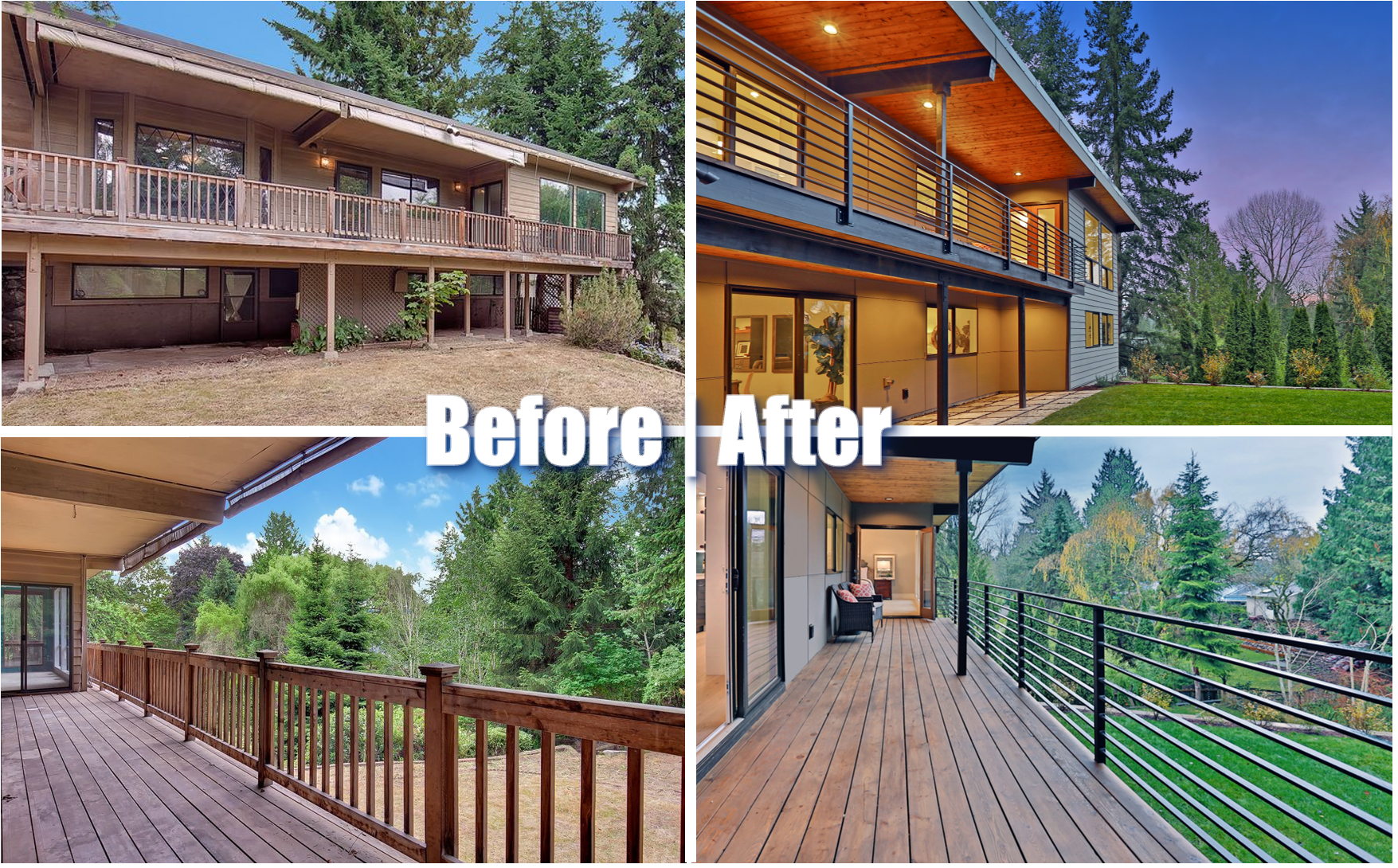
Before and after of second story deck resurfacing with new railing and soffits.
Sometimes we remove decking expecting trouble and find that the framing underneath is still in very good condition.
In that situation, replacing perfectly usable framing may not make financial sense.
We may be able to:
Replace the decking
Add fascia
Improve the border
Replace outdated railing
Rebuild stairs
Correct smaller structural deficiencies
Protect the existing framing
Give the deck a completely different appearance
This can be an excellent pre-sale strategy.
3. The Deck Is Structurally Sound but Just Looks Dated → Improve It, Don't Necessarily Replace It
This is where I have told homeowners: “I would not rebuild this deck if I were you.”
Maybe it needs cleaning.
Maybe a few boards need attention.
Maybe the railing is what is making the entire deck look old.
Maybe the layout isn't perfect, but it isn't bad enough to justify rebuilding it three months before you move.
A deck contractor should be willing to tell you that.
4. The Deck Is Fine but Doesn't Match a High-End House → Evaluate the Buyer Expectation
This is more subjective and require professional expertise.
A functional deck can still feel like a negative when it is attached to a highly finished custom home.
This is where the seasoned real estate agent and professional deck builder familar with the local market need to work together.
The contractor can share what popular homeowner selections, cost-saving materials that achieve the same look and tell you what it would cost to improve it.
The agent can help determine whether buyers at that property's price point are likely to care enough to justify the investment.
5. The Deck Is Already Safe, Clean and Presentable → Leave It Alone
Selling a home does not require rebuilding everything that isn't new.
Your money may produce a better return somewhere else.
Why a Deteriorated Deck Can Make Buyers Question More Than the Deck
This is something I think sellers sometimes underestimate.
Put yourself in the position of a homebuyer.
You arrive at a house that looks beautiful in the listing photos. The kitchen is updated. The landscaping looks good.
Then you walk outside and see a deck with rotting boards, loose railing, failing stairs or obvious deferred maintenance.
You may begin wondering: “If they let the deck get this bad, what else hasn't been maintained that I just haven't found yet?”
Now the deck isn't only a deck problem. It has potentially created a confidence problem.
Buyers begin wondering about the roof, siding, drainage, windows, foundation, plumbing or other areas they can't immediately see. That doesn't mean every imperfect deck scares away buyers. But major visible deferred maintenance can change the way someone looks at everything else.
For sellers, one goal should be eliminating the obvious objections that can make a buyer begin searching for additional problems.
Structural Problems Often Don't Stop at the Edge of the Deck
One reason I recommend having an experienced deck builder evaluate the structure before listing is that deck problems aren't always limited to the deck itself. The connection between the deck and the house is one of the areas I pay particular attention to.
When we remove older decks, we sometimes uncover deterioration around:
Ledger boards
Rim joists
House sheathing
Siding
Flashing
Door transitions
Framing penetrations
Areas where water has repeatedly collected
These aren't always visible with the deck still in place.

Before and after of ground level deck where rot was discovered at deck transitions. Endura Decking Co corrected these issues before replacing the deck with TimberTech Vintage Dark Hickory decking.
On our own deck replacement projects, we've repaired hidden dry rot involving sheathing, siding, belly bands and rim joists after opening up the existing structure. Endura's current deck replacement work specifically includes structural evaluation and rebuilding for water damage, dry rot, failing framing and poor original construction.
From a seller's perspective, I would rather identify a legitimate problem early enough to determine how to address it than have it become a surprise after accepting an offer. A buyer's home inspector may identify symptoms of those issues later in the transaction, at exactly the point when neither side wants another major question.
If a deck contractor you’re considering is not willing to visit your property, you should move on.
If We Rebuild It, We Should Build It to Handle Pacific Northwest Weather Better
If the decision is to replace or substantially renovate the deck, I don't believe in rebuilding it exactly the same way and expecting a different outcome.
Water is one of our biggest enemies in the Pacific Northwest.
Where appropriate, our approach can include improved flashing and moisture management at the house connection and protecting pressure-treated framing with joist flashing tape such as G-Tape.
That additional protection helps keep water away from vulnerable areas on top of the joists and beams.
For elevated decks where the space underneath has value, we can also evaluate above-joist waterproofing or drainage systems that collect water before it repeatedly saturates the framing. Endura uses these systems on projects where creating dry, usable space below makes sense.
What About Aluminum Deck Framing?
Aluminum framing is another excellent option for long-term durability, but this article is specifically about preparing a house for sale.
If we're trying to protect your return and control the pre-sale budget, aluminum framing would generally NOT be my recommendation. It's a premium long-term solution.
If you're planning to stay in your home for decades, that's a different conversation.
If you're listing in a few months, I would normally spend that money somewhere buyers are more likely to see and value it.

Timbertech Aluminum Framing and Impressions Rail Express railing.
How Much Value Can a New Deck Add Before Selling?
This is where the numbers get interesting. The 2025 Cost vs. Value Report compares project cost with estimated resale value in 119 U.S. markets.
For Seattle, it reported:
Wood Deck Addition
Approximate job cost: $20,294
Estimated resale value: $16,861
Estimated cost recouped: 83.1%
Composite Deck Addition
Approximate job cost: $28,639
Estimated resale value: $22,785
Estimated cost recouped: 79.6%
The percentages are relatively close, but notice something important:
The composite project produced a higher estimated dollar value at resale, even though wood produced a slightly higher percentage return because it cost less initially. These are standardized projects and should not be interpreted as a prediction that your particular deck will return exactly 79.6% or 83.1%. A lakefront or golf-community custom home in Sammamish isn't the same as an average Seattle house.
But the data demonstrates something useful:
Deck improvements can retain a meaningful portion of their cost at resale.
And I think there is another part of ROI that is harder to measure.
Sometimes the Value Isn't Just What the New Deck Adds
Sometimes the value comes from eliminating what the old deck was taking away.
If a failing deck creates a $50,000 question mark in a buyer's mind, fixing it may prevent an objection, inspection negotiation or price reduction.
That is different from simply saying:
“I spent $40,000, so my house is now worth $40,000 more.”
Real estate doesn't work that neatly.
Today's Eastside Market Makes the Decision More Important
Everybody selling a house would love to put it on the market Friday and have a bidding war by Sunday. But we shouldn't build a pre-sale strategy around assuming that will happen.
At the time I'm writing this in September 2026, Zillow's latest Sammamish data reports that 15.6% of sales closed above list price while 68.2% closed below list price. It also reports a median sale-to-list ratio of 98.2%.
That doesn't mean good homes aren't getting multiple offers - they still are.
It means sellers need to be thoughtful about where they spend their money because buyers have more opportunity to compare properties and scrutinize condition.
This is exactly where I would lean heavily on a knowledgeable real estate broker.
A Real Estate Broker We Trust: Tyler Staples
For homeowners on Seattle's Eastside, one person I am comfortable referring clients to is Tyler Staples of Tyler Staples Real Estate.

Tyler Staples, Seattle Eastside Real Estate Broker
I’ve worked with Tyler personally on business projects. We've worked with him on business projects, purchased land for our custom home through him, and trusted him with the sale of our own home. I trust his perspective and always feel confident that Tyler always has his client’s best interests at heart.
What’s even better, is that Tyler was born and raised on the Eastside, has a background in construction and remodeling, and works with sellers on property evaluations, staging, pricing, market data and determining which improvements are actually worth making before a sale.
That's particularly valuable here because there are really two different questions:
The deck builder's question:
What does this deck actually need?
The real estate agent's question:
Will doing that work help me sell this particular home?
Those answers need to meet somewhere in the middle.
A knowledgeable broker like Tyler can also give you current feedback on what buyers are responding to right now, because those expectations change with the market.
Don't Automatically Buy the Most Expensive Decking Because You're Rebuilding
This is another place where a knowledgeable deck builder should save you money.
I love TimberTech AZEK Vintage Collection. We install A LOT of it. It's a beautiful premium product and, in my opinion, has one of the most realistic wood looks of any manufactured decking material we've installed. It's also full PVC, with no wood fibers in the board to absorb moisture.
But if you're selling the house, Vintage IS NOT automatically the right choice.
The goal isn't to build my favorite deck. The goal is to select the material that fits your house, looks good to buyers and makes financial sense.
A Practical TimberTech Material Strategy for a Home You're Selling
Value Option: TimberTech Prime or Prime+
For many resale-focused projects, TimberTech's Prime or Prime+ composite lines can accomplish the goal at a substantially lower material price point than a premium Vintage deck.
Prime and Prime+ provide low-maintenance capped composite decking with 25-year product and fade-and-stain warranties. TimberTech currently positions them at its value end of the product range.
We've used TimberTech Prime Collection on resale-focused projects where the objective was exactly this: create a clean, attractive, low-maintenance deck without putting premium money into a house the owner was preparing to sell.
That can be a very smart choice.
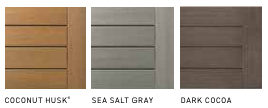
TimberTech Prime+ Deck Color Options
Better Longevity: TimberTech AZEK Harvest Collection
If the home's price point supports spending more and longevity matters, I like looking at TimberTech AZEK Harvest Collection.
Harvest is Advanced PVC rather than wood-plastic composite.
That means there are no wood fibers in the decking board.
TimberTech says its Advanced PVC products are highly resistant to moisture-related damage and estimates PVC decking can last 50 years or more. Harvest also sits below Vintage in TimberTech's current price hierarchy.
For a Pacific Northwest home, that's a compelling story for a future buyer:
No wood in the decking itself to rot.
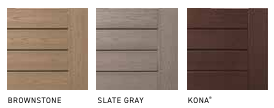
TimberTech Harvest Collection color options
Premium Option: TimberTech AZEK Vintage Collection
Vintage is without-a-doubt one of my favorite materials when the house justifies it.
It has exceptional colors and grain patterns and is built entirely from high-performance polymers with no wood fibers.
On a luxury lakefront or custom Eastside property, it may be exactly the right product.
On a more modest home you're planning to sell immediately?
You may be spending money the buyer never fully gives you back.
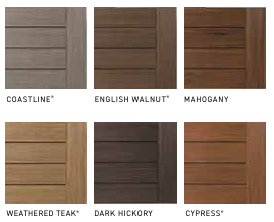
TimberTech Vintage Collection Deck Color Options
Don't Underestimate the Value of Good Deck Design
Material is only half of it. A knowledgeable deck builder should also be able to help you make safe design choices for resale.
When Endura Decking Co. visits your home for an onsite evaluation, we don’t just measure your deck, we look at:
Where the stairs should go
How buyers naturally move from the house to the yard
Whether a large stair landing feels awkward
Whether the deck blocks a view
Whether the deck feels too small for the house
Whether the railing makes the space feel closed in
Which colors coordinate with the siding and trim
Whether a picture-frame border is worth adding
Whether multiple decking colors help or hurt
How fascia should be finished
Whether an existing layout can be improved without significantly increasing cost
If you're building your forever deck, choose whatever makes you happy. When you're selling, I normally recommend more universally appealing decisions.
Neutral browns, grays and natural wood tones tend to be safer than very personalized combinations. Coconut Husk in the TimberTech Prime+ Collection has been a popular choice for home sale projects. For custom builds, Vintage Dark Hickory and Coastline are also very popular choices.
Clean, simple layouts age better than designs that feel overly complicated.
The best pre-sale deck isn't necessarily the most expensive deck.
It's the deck that makes buyers walk outside and think:
“This is nice. I don't have to do anything here.”
What Is a Good Cost-Effective Railing Before Selling?
The same logic applies to railing. Cable and frameless glass can be beautiful. They can also consume a significant portion of the project budget. For a resale-focused deck, one product I like is TimberTech Fulton Rail.
Fulton is a black galvanized-steel railing with narrow balusters and a clean appearance. TimberTech specifically positions it as an economical railing option, and its panelized construction also helps control installation labor. It carries a 15-year limited residential warranty. It gives you a modern black railing without automatically moving into cable- or glass-railing pricing.
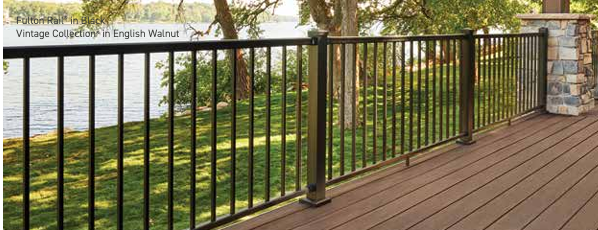
TimberTech Fulton Vertical Railing in black.
For a higher-end home, TimberTech Impression Rail Express is a powder-coated aluminum step-up that offers black, bronze or white finishes and a 25-year limited product warranty.

TimberTech Impression Rail Express in black with lights.
Again, match the railing to the house.
Don't put a $40,000 railing system on a deck when a $15,000 railing system would have created virtually the same impression for the buyer.
Should I Add a Covered Deck Before Selling?
Generally, if you don't already have a cover, I would not automatically recommend adding one just because you're selling.
Deck covers can be fantastic in Washington. We build them regularly because they can turn an outdoor space into something homeowners use almost year-round.
But covers also bring:
Structural requirements
Larger footings
Posts and beams
Engineering
Permitting
Roofing
Electrical
Gutters
Additional finish work
That investment can make excellent sense for someone planning to live in the house. It becomes harder to justify when you're selling immediately.
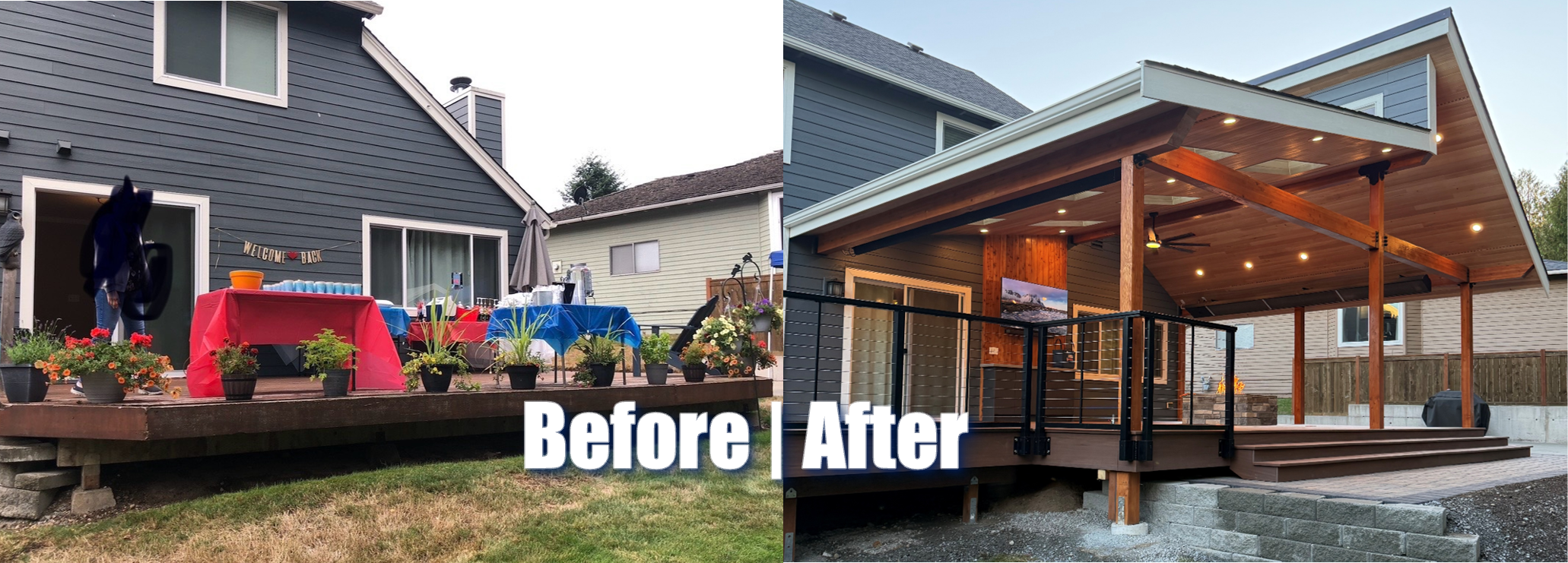
Before and after of project with added cover and new deck. Dual angled cover was built for design but also to accommodate second floor window. The client wanted to preserve natural light and as a solution, six skylights and additional transom windows were installed. Deck surface was built with TimberTech Vintage Mahogany.
There Are Exceptions
I would evaluate it more seriously when:
The architecture is obviously designed for a covered outdoor area
Comparable homes at your price point commonly have one
The home has a view or outdoor setting where the space is a major selling feature
The deck is already elevated and waterproofing it would create a valuable covered living area below
You're already completing substantial structural work and the incremental cost makes sense
A waterproofed second-story deck can be particularly interesting because you're not only improving the deck surface. You can potentially create an entirely new dry outdoor living area underneath it. That can fundamentally change how a buyer uses the backyard. But again, this is a contractor + real estate agent decision, not something I would add automatically.
What Should I Ask My Real Estate Agent Before Replacing My Deck?
Before signing a deck contract, ask your agent:
1. Is the deck actually hurting the home's marketability?
Ask whether buyers at your price point will view its current condition as a significant objection.
2. What are comparable homes offering?
Are nearby homes selling with newer decks, covered spaces and low-maintenance materials?
3. What price range are we targeting?
The answer affects how much finish quality buyers may expect.
4. Would repairing the deck be enough?
Your agent may believe eliminating obvious deferred maintenance is more important than creating a completely new space.
5. How much should I spend before listing?
There should be a total pre-listing budget, not ten contractors independently recommending improvements without considering the bigger financial picture.
6. What are buyers responding to in the current market?
This is where a strong local broker earns their money. Market conditions change. Your strategy should change with them.
What Should I Ask My Deck Builder Before Replacing a Deck to Sell My Home?
This conversation should be different from designing your forever deck. Ask:
1. Does the entire deck really need to be replaced?
A good contractor should be willing to say no.
2. Can the existing framing be reused?
If so, resurfacing may save a substantial amount of money.
3. Are there structural or moisture problems where the deck meets the house?
This is one of the areas you should care about most. Your deck builder may not always be able to see the underlying water damage under your siding, but they may be able to get an idea from some of the framing.
4. How will you protect the new framing from water?
Ask about flashing, ledger waterproofing and joist protection.
5. What is the least expensive material you would still feel good putting on this house?
That's a much better resale question than: “What's your best decking?”
6. Which colors and designs have the broadest buyer appeal?
Your deck contractor sees a lot of finished projects. Use that experience.
7. Can I reduce cost without making the deck look inexpensive?
Usually, yes. That might mean a different TimberTech collection, simpler border details or a more cost-effective railing.
8. Do you offer financing?
If preserving cash before a home sale matters, ask what options are available.
Endura Decking Co. offers project financing through HFS Financial. Their financing program uses consumer home-improvement loans and offers prequalification options without requiring home equity.
Financing doesn't make an unnecessary project worthwhile. But once you've decided the work makes financial sense, it can give you another way to manage the upfront cost.
9. Can you handle more than just the deck if problems are uncovered?
This is important. If removing the old deck exposes rot where it meets the house, you don't want everybody standing around trying to figure out who can repair the house before the deck project can continue. Endura is a licensed general contractor, which allows us to address broader structural and weatherproofing issues that can arise during a deck rebuild.
Should I Just Give the Buyer a Credit Instead?
Maybe. But don't assume that's automatically cheaper. If you know the deck actually needs $30,000 of work, you may look at it as a $30,000 problem.
A buyer who has never built a deck may look at it and imagine: $50,000? $75,000? What else are they going to find?
Uncertainty has a cost.
At the same time, spending $50,000 before listing a house when buyers wouldn't have cared about the deck is also a mistake.
That's why I'd get both opinions before deciding:
Your contractor tells you what is actually wrong and what it costs to fix.
Your real estate agent tells you whether fixing it makes sense for the sale.
Then you make an informed decision.
My Advice as a Sammamish Deck Builder
I've looked at decks where my recommendation was:
“Don't rebuild this. Let's improve the cosmetic issues and leave the structure alone.”
I've looked at others where I wouldn't feel comfortable telling a homeowner to put the house on the market without addressing the deck.
There isn't one answer.
If the deck is unsafe, structurally failing or covered in obvious rot, replacing it before selling deserves serious consideration.
If the framing is solid, resurfacing may accomplish nearly everything you need.
If it's structurally sound and simply isn't the deck you would build today, you may be better off keeping your money.
And if you're selling a custom or luxury Eastside home, remember that buyers will evaluate the deck in the context of the entire property.
The goal isn't to build the most expensive deck possible. The goal is to remove objections, complement the home and spend the money where it has the best chance of helping your sale.
Need a Deck Evaluation Before Selling Your Eastside Home?
Endura Decking Co. is a family-owned, Sammamish-based deck contractor serving Sammamish, Issaquah, Bellevue, Redmond, Kirkland, Woodinville, Snoqualmie, North Bend and surrounding Eastside communities.
If you're preparing your home for sale and aren't sure whether your deck should be repaired, resurfaced or completely rebuilt, we can evaluate the structure and talk through the options with you.
We'll look at:
Structural condition
Rot and moisture exposure
Existing framing
Deck-to-house connections
Stairs and railing
Decking condition
Waterproofing
Layout and buyer-friendly design
Material choices
Cost-conscious alternatives
Financing options
Whether a complete replacement actually makes sense
If I don't think you need a new deck, I'll tell you. If I think leaving the deck as-is could become a meaningful problem during the sale, I'll tell you that too. The goal isn't simply to sell you a deck. It's to help you make the right decision for the house you're selling.
START YOUR ONSITE EVALUATION
Check out our gallery and social channels for pictures, updates and upcoming events.
Instagram | Facebook | YouTube | Read our reviews
FAQ
Should I replace my deck before selling my house?
You should strongly consider replacing a deck before selling when it has structural deterioration, unsafe railings or stairs, significant rot, movement or obvious deferred maintenance. If the underlying structure remains sound, resurfacing or targeted repairs may be a better financial choice.
Does replacing a deck increase home value?
It can. The 2025 Cost vs. Value Report estimated that a Seattle wood deck addition recouped 83.1% of project cost and a composite deck addition recouped 79.6%. Actual resale impact depends on your home's location, price point, condition, design and current market.
Should I repair or replace my deck before selling?
If the framing, footings and structural connections are sound, repairing or resurfacing may accomplish what you need. Significant rot, unsafe framing or major structural deficiencies generally make replacement a better option.
Can an old deck hurt the sale of my house?
Yes. An old deck isn't automatically a problem, but a visibly neglected or unsafe deck can cause buyers to worry about immediate repair costs and may also make them question whether other areas of the home have deferred maintenance.
What is the best decking material when selling a home?
There is no single answer. For a value-focused project, TimberTech Prime or Prime+ composite may provide an attractive low-maintenance finish without premium-material pricing. For buyers who value maximum moisture resistance and longevity, TimberTech AZEK Advanced PVC contains no wood fibers, with Harvest offering a more budget-conscious PVC option than premium Vintage Collection.
Is TimberTech AZEK worth installing before selling?
It can be on higher-value homes where the quality of the outdoor space needs to match the property. On a more budget-conscious pre-sale project, premium Vintage Collection may be more than you need. A knowledgeable deck builder should help match the product tier to the home.
What is a cost-effective railing for a deck before selling?
TimberTech Fulton Rail is one option we like for resale-focused projects. Its black galvanized-steel design creates a simple modern appearance at a more economical price point than many cable, glass or aluminum systems.
Should I add a covered deck before selling my home?
Usually not solely for resale. A new cover adds engineering, permitting and construction costs. It may make sense on certain higher-end homes or when waterproofing an elevated deck creates valuable usable outdoor space below.
Can a deck contractor repair rot where the deck attaches to my house?
A licensed general contractor with the appropriate experience may be able to repair structural deterioration uncovered where the deck connects to the home. Endura Decking Co. evaluates these areas during structural deck replacement projects and can address many related framing and weatherproofing issues.
Who should I talk to before replacing my deck to sell my house?
Ideally, talk with both an experienced deck contractor and a knowledgeable local real estate broker. The contractor should determine what the deck actually needs and what the options cost. Your agent can help determine which investment makes sense for your home's expected buyer and current market.