Fire Features for PNW Decks: Gas vs. Electric, Costs & Design Options
In this guide, you’ll learn:
The pros and cons of gas vs. electric fire features
Safety requirements for decks in the PNW
Typical cost ranges for fire pits and fire tables
Whether your deck needs reinforcement or ventilation
Best design options for modern outdoor living
How to plan your fire feature during your deck build
When to involve gas, electrical, or engineering professionals
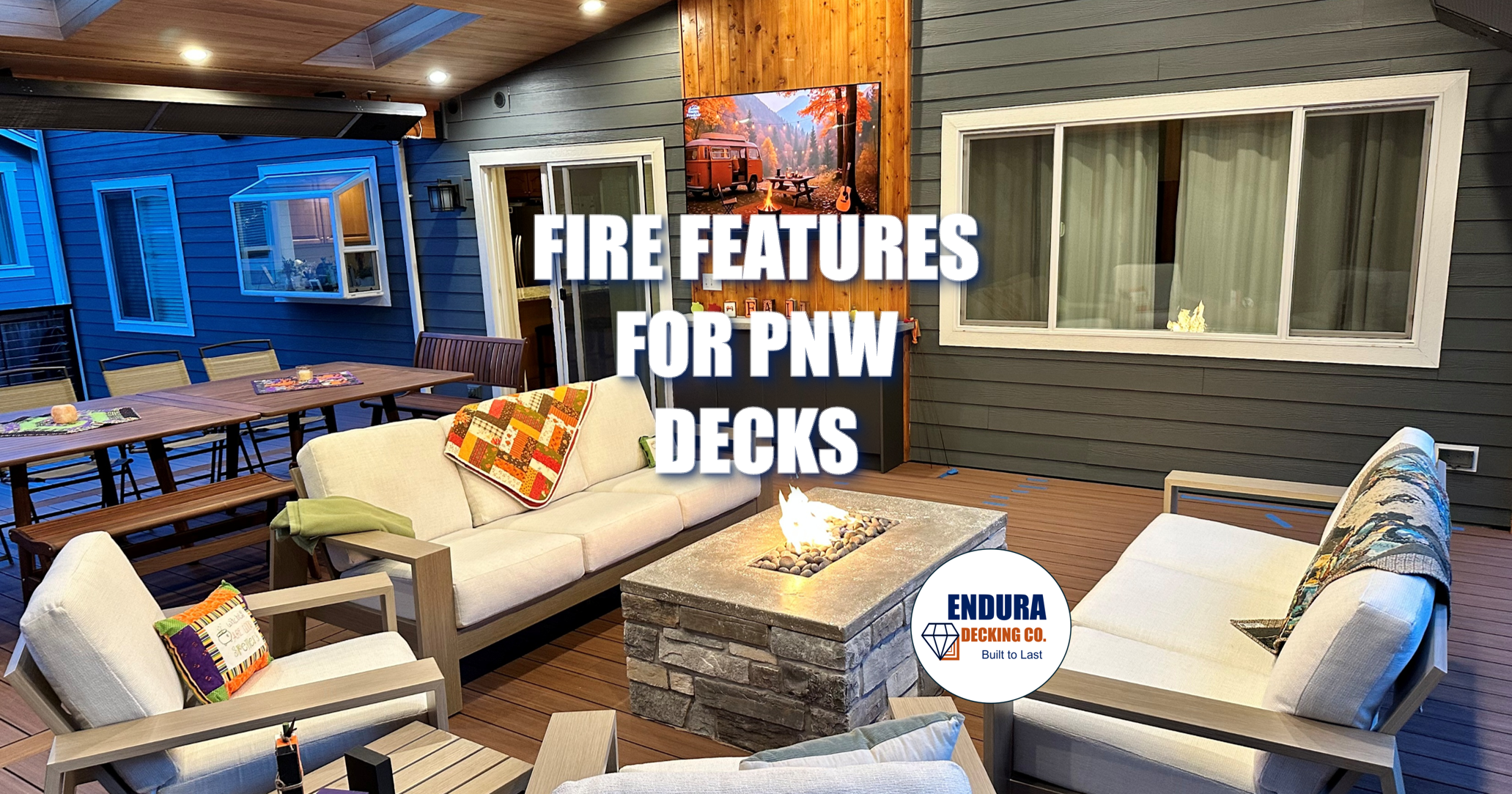
Modern PNW Deck with Gas Firepit, Overhead Gas Heaters and Dramatic Deck Cover
Fire features have become one of the most popular upgrades for outdoor living spaces across Sammamish, Redmond, Issaquah, Bellevue, and Mercer Island. After homeowners choose their deck material and railing, the next question is almost always the same: “Can we add a fire pit?”
The short answer is yes — but choosing the right fire feature for a PNW deck requires planning, safety considerations, and an understanding of how different systems perform in our climate. As a general contractor with more than 10 years of experience building outdoor living spaces, I’ve installed every type of fire feature you can imagine. This guide breaks down what works best, what to avoid, and how to plan your project the right way.
1. Gas vs. Electric: Which Is Better for PNW Decks?
Gas Fire Features (Natural Gas or Propane)
Gas fire pits and fire tables are the most popular choice for homeowners who want a clean, modern look with real flame.
Pros:
Instant on/off
No smoke
Works well under covered structures (with proper clearance)
Strong, adjustable flame
Great for modern designs
Cons:
Requires gas line installation
Higher upfront cost
Must meet clearance and ventilation requirements
Gas is ideal for homeowners who want a permanent, built‑in feature that feels like a natural extension of the deck.
Electric Fire Features
Electric fire tables have come a long way and are a great option for decks where running gas isn’t practical.
Pros:
Lower cost
Easy installation
Safe for smaller decks
No ventilation concerns
Works well under covers
Cons:
Flame is less realistic
Requires a dedicated outdoor outlet
Lower heat output
Electric is perfect for homeowners who want ambiance without the complexity of gas but in most cases, the homeowners I work with pick gas due to the heat output and convenience for year-round outdoor living it provides.
2. Safety Requirements for Deck Fire Features
Safety is the number one priority when adding a fire feature to a deck. Here’s what we evaluate on every project:
1. Clearance to Combustibles
Gas fire pits require specific distances from siding, railings, soffits, and overhead structures. We follow manufacturer specs and local code.
2. Ventilation
Built‑in gas features must have proper airflow to prevent gas buildup. This is especially important under covered structures.
3. Deck Material
PVC decking like AZEK Vintage performs extremely well around heat because it doesn’t splinter, crack, or absorb moisture. We still use heat‑resistant pads or stone bases when needed.
4. Structural Support
Some fire tables weigh 150–300 lbs. Built‑in features can exceed 500 lbs. We reinforce framing when necessary.
5. Gas & Electrical Permits
We coordinate with licensed gas fitters and electricians to ensure everything is installed safely and to code.
3. Cost Breakdown for Fire Features in the Seattle Area
Here’s what homeowners typically invest:
Electric fire table: $600–$3,500
Portable propane fire pit: $300–$2,400
Built‑in gas fire pit: $4,000–$12,000
Gas line installation: $1,200–$3,500
Stone or masonry surround: $2,000–$8,000
Costs vary based on design, materials, and whether the feature is integrated into a new deck or added to an existing one. Don’t forget to ask Endura Decking about our recommended overhead gas heating, Eventube heaters. They crank out significant heat so even the people who run cold, are comfortable.
4. Best Design Options for PNW Decks
Modern linear fire tables for clean, contemporary spaces
Round fire pits for conversational seating
Built‑in stone surrounds for luxury outdoor living. We can complete this with a matching stone or granite top.
Fire features under covered structures for year‑round use
Integrated seating walls for multi‑level decks
We help homeowners choose options that complement their deck layout, railing style, and overall outdoor living goals.

Warming Trends Cross Fire Firepit with limestone veneer and cap stone on waterproofed deck with outdoor living below.
5. When to Plan Your Fire Feature
The best time to plan a fire feature is during the deck design phase. This allows us to:
Reinforce framing
Run gas or electrical lines
Plan seating and traffic flow
Ensure proper ventilation and cover height
Integrate lighting, fans and soffit design
If you’re planning a deck for summer, winter is the ideal time to start. Permits, engineering, and design all take time — and starting early ensures your project is ready when the weather turns.
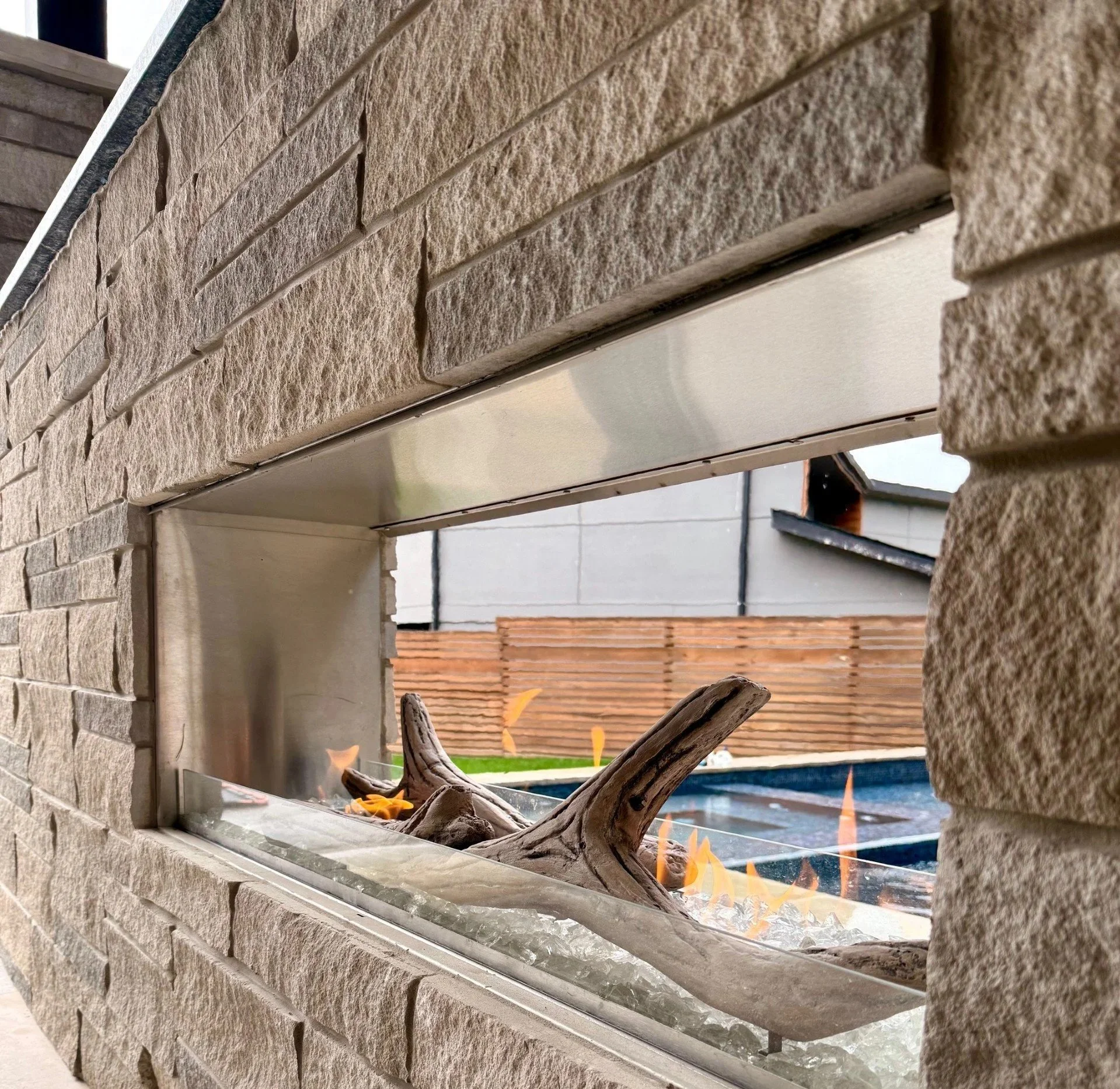
Outdoor see-through fireplace with limestone veneer and soapstone top.
6. GET CUSTOMIZED RECOMMENDATIONS
We’re proud to be a premium Seattle deck builder serving our community. Endura Decking Co. participates in local home shows, supports youth sports, and stays active with Eastside chambers of commerce. These events give homeowners a chance to see materials, compare pricing options, and explore design ideas.
Follow our social channels for updates on upcoming events.
Read our reviews!
FAQ
Can I put a fire pit on a PVC deck?
Yes — with proper heat protection and clearance.
Do I need a permit for a gas fire pit?
Gas line installation requires a permit in most King County jurisdictions.
Can fire features go under a covered structure?
Yes, if the manufacturer allows it and ventilation requirements are met.
Is electric safer than gas?
Electric has fewer clearance requirements, but both are safe when installed correctly.
Ready to FIND OUT with fire feature is right for your deck?
If you’re considering a fire feature for your deck, we’d be happy to help you design a safe, beautiful outdoor space built for year‑round PNW living.